Service 07
Bird Proofing & Physical Deterrents
Falconry and proofing — stronger together
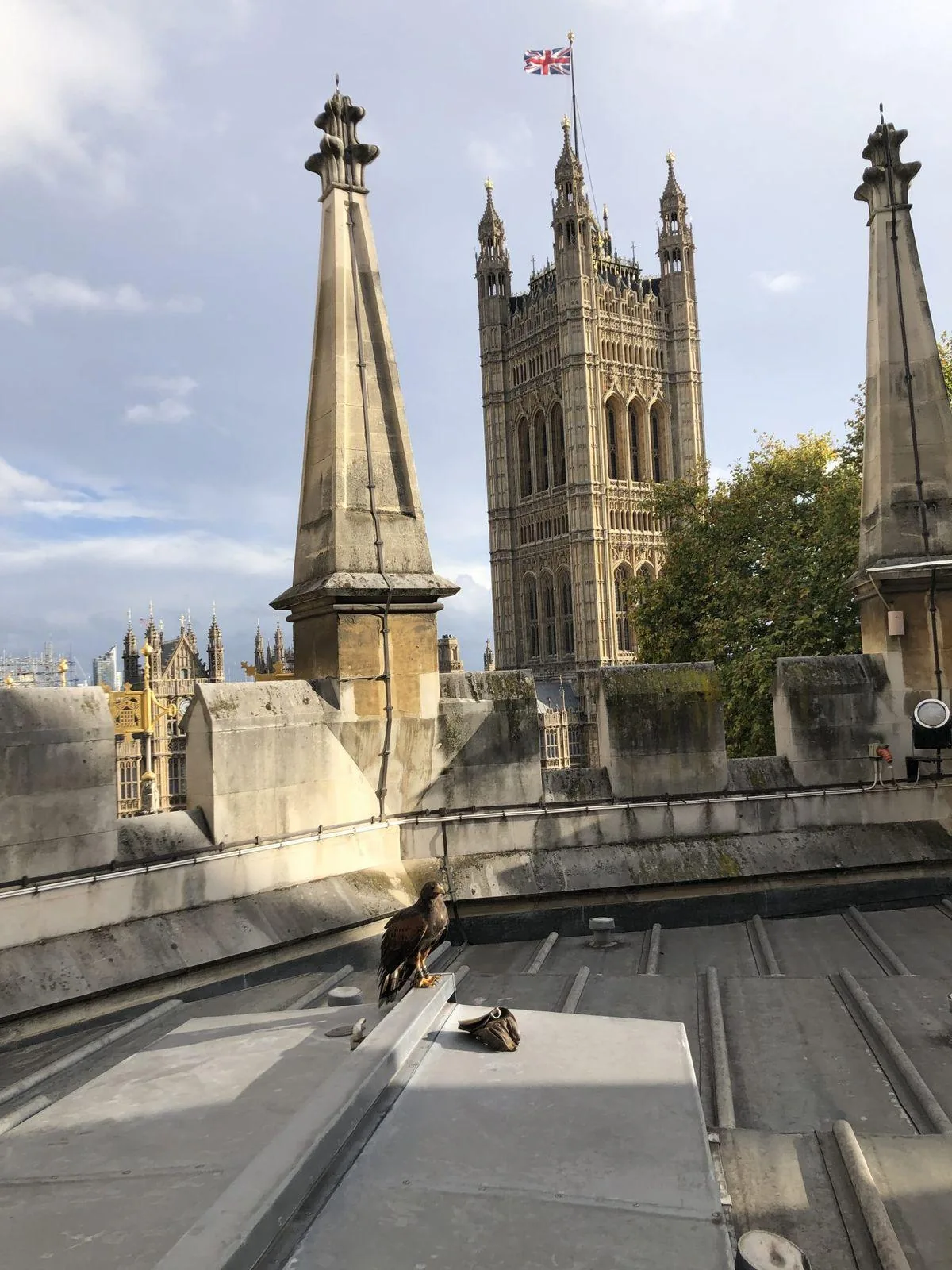
Physical deterrents and falconry-led bird control are not competing approaches — they are complementary. Proofing systems exclude birds from specific surfaces and voids. Falconry creates active predator pressure across the wider site, preventing displacement from one area simply relocating the problem to another.
The most effective long-term bird management programmes combine both: physical exclusion where persistent roosting or nesting is occurring, and an active falconry programme to maintain site-wide pressure. Avian Environmental UK delivers both disciplines under one programme, ensuring the two methods are coordinated rather than working against each other.
"A spike system on a parapet stops roosting on that ledge. A Harris hawk stops the birds being on the building entirely. The right answer is usually both."
Bird netting
Bird netting is the most comprehensive physical exclusion method available. When correctly specified and installed, it provides a total barrier against all bird species, preventing access to roof voids, courtyards, canopies, loading bays and structural cavities.
- Heavy-duty polyethylene or stainless steel mesh options
- Species-specific aperture sizing — pigeon, starling, sparrow
- Suitable for complex architectural geometries
- Minimal visual impact when correctly tensioned
- Particularly effective on listed and heritage buildings where other methods are unsuitable
Spike systems
Spike systems prevent birds from landing and roosting on ledges, parapets, signage, CCTV gantries, window sills and structural outcroppings. Modern spike systems are low-profile and aesthetically considered — a significant improvement on earlier generations of the product.
- Stainless steel and polycarbonate options
- Narrow, wide and extra-wide base configurations
- Suitable for pigeons, gulls and corvids
- UV-stable adhesive or mechanical fixing
- Effective on horizontal and angled surfaces
Solar panel bird proofing
The void beneath solar panel arrays creates highly attractive nesting and roosting conditions for feral pigeons and starlings. Once established, nesting colonies beneath panels are difficult to displace, cause significant fouling, and present a fire risk from accumulated nesting material near cabling.
Solar panel bird proofing uses purpose-designed mesh systems fixed to the panel frame perimeter, closing the void entirely without affecting panel performance, access hatches or warranty conditions.
- Compatible with all major panel manufacturers and mounting systems
- Powder-coated aluminium clips — no adhesive to panel surfaces
- PVC-coated galvanised or stainless steel mesh
- Does not void panel manufacturer warranties
- Access panels available where maintenance requirements exist
Post and wire systems
Post and wire is a low-visual-impact deterrent system suited to heritage buildings, conservation areas and high-specification architectural environments where spike systems are not appropriate or permitted. Stainless steel wire tensioned between discrete posts creates an unstable landing surface, deterring roosting without physical harm.
- Near-invisible from ground level when correctly installed
- Particularly suited to listed buildings and conservation areas
- Compatible with stone, brick, concrete and metal substrates
- Stainless steel throughout — corrosion-resistant, minimal maintenance
Bird Free optical gel
Bird Free optical gel dishes present a visual stimulus — UV light — that birds perceive as fire, triggering a strong aversion response. The dishes are discreet, require no power, and are effective on ledges, beams, signage and structural features where spikes or wire cannot be fixed.
- No mechanical fixing required — adhesive dish mounting
- Effective against pigeons, gulls and starlings
- Long service life — typically 2–3 years per application
- Suitable for food production environments — food-safe formulation
- Useful in conjunction with other proofing methods on complex sites
Why combine proofing with falconry
Physical proofing alone addresses the symptom — birds on a specific surface — but not the underlying pressure. Where bird populations are high, displacement from one proofed area will simply redirect birds to adjacent unproofed areas on the same building, or neighbouring structures.
An active falconry programme running alongside physical works achieves two things: it reduces the overall site bird pressure, making proofing more effective at the points it is installed; and it discourages re-colonisation of proofed surfaces by maintaining predator presence.
- Falconry reduces site pressure — proofing holds the exclusion
- Fewer displacement problems to adjacent areas
- Proofed surfaces remain effective for longer under reduced pressure
- Single programme management — both disciplines coordinated
- Full compliance documentation across all methods