Service 02
Gull Mitigation — Falconry-Led Gull Control
Gull pressure in urban environments
Urban gull populations are not comparable to coastal birds. They nest on rooftops, exhibit territorial aggression during breeding season, and return to established sites with near-total fidelity each spring. A colony unmanaged for one season almost always grows the next.
"Pre-nesting intervention is substantially more effective than managing an active colony. The window before gulls establish territorial attachment to a site is narrow — and seasonal."
How falconry-based gull deterrence works
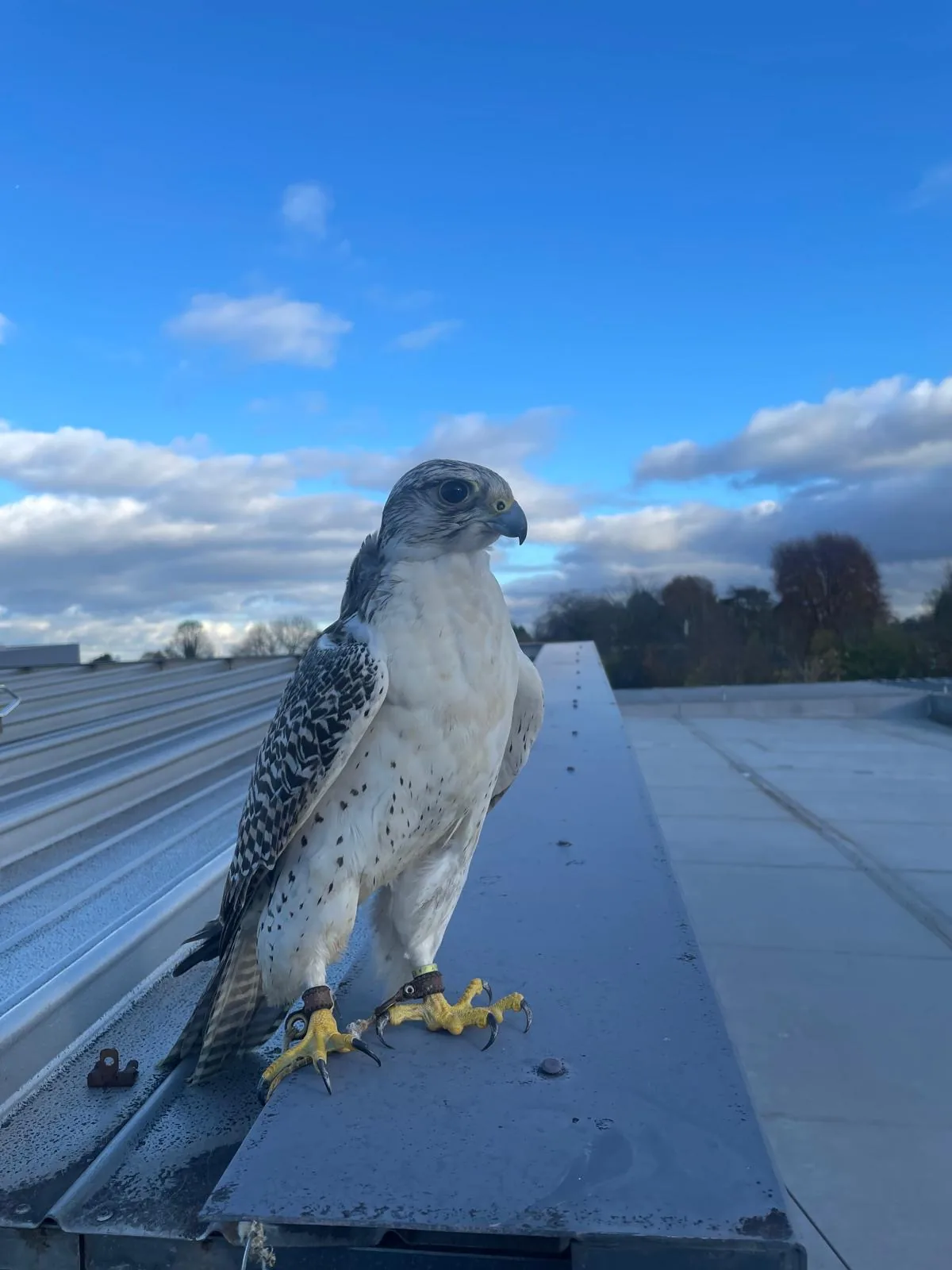
Introducing trained birds of prey during the pre-nesting period (January–March) prevents gulls from establishing territorial attachment. Once nesting begins, displacement requires sustained effort over subsequent seasons. Falconry creates genuine predator presence — the one deterrent gulls cannot habituate to.
Species managed
- Lesser black-backed gull (Larus fuscus)
- Herring gull (Larus argentatus)
- Great black-backed gull (Larus marinus)
- Common gull (Larus canus) where relevant
- Corvids — jackdaw, carrion crow
Site types served
- Urban and city-centre commercial buildings
- Industrial and warehouse estates
- Landfill and waste management sites
- Food production and processing environments
- Transport infrastructure and logistics sites
- Heritage and listed buildings
- Hospital and healthcare estates
Legal framework for gull management
Gulls are fully protected under the Wildlife & Countryside Act 1981. Lethal control requires General or Specific Licences from Natural England and must pass specific legislative tests. Our falconry-based deterrence operates within the law without requiring licences for standard deterrence activity.