Service 03
Feral Pigeon Control — Avian Environmental UK
Feral pigeon pressure in urban environments
Feral pigeons are highly habitual. They return persistently to established roosting sites and quickly recolonise areas where management has stopped. Acoustic and visual deterrents lose effectiveness within weeks — pigeons learn to ignore them.
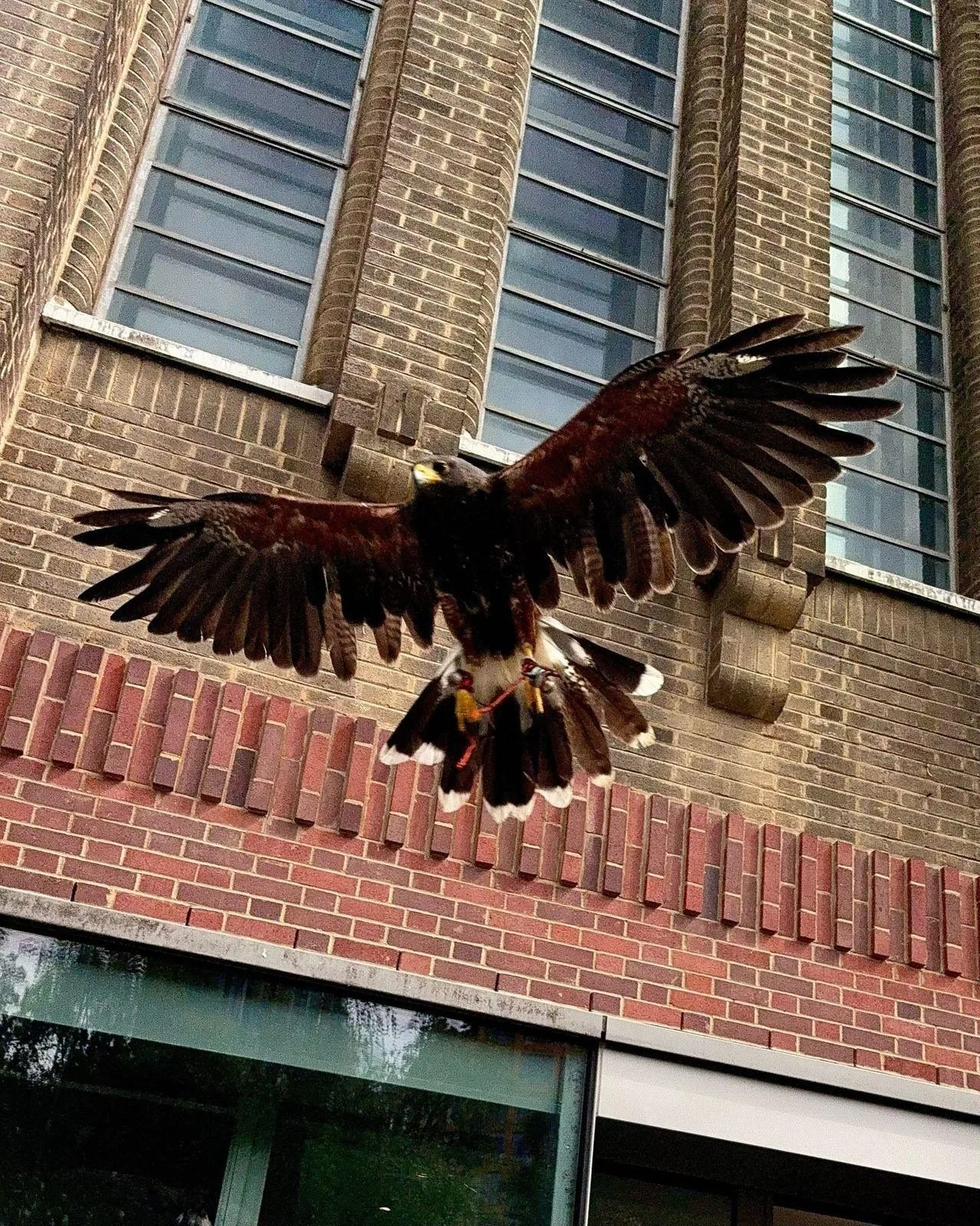
Falconry-based deterrence provides genuine predator presence that pigeons cannot habituate to. Sustained programmes progressively reduce the attractiveness of a site to the local population.
"You could have a large falcon that would terrify everything, but after a couple of days — if it doesn't physically chase them and try to eat them — it's not a threat." — Wayne Davis, Los Angeles Times
Programme structure for pigeon management
Feral pigeon programmes are year-round, with deployment frequency determined by the pressure level at the specific site. Initial assessment identifies key roosting and feeding locations, access points and the behavioural patterns of the local population.
Typical pigeon control environments
- Commercial buildings and office estates
- Retail centres and shopping areas
- Listed and heritage buildings
- Railway stations and transport infrastructure
- Food production and hospitality environments
- Warehouses and industrial facilities
- Public spaces and squares