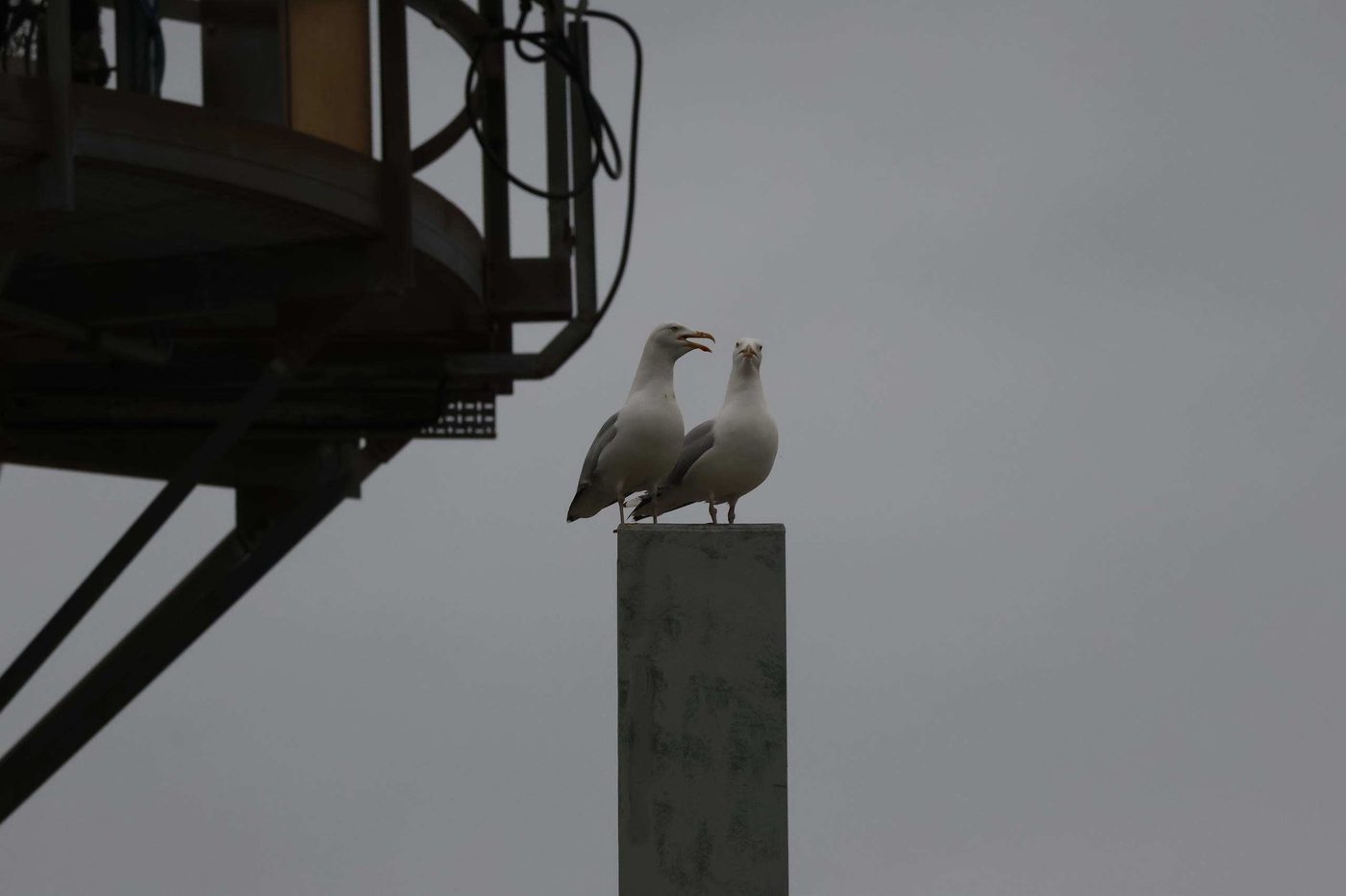
Point of Ayr gas terminal at dusk — industrial bird management site, Liverpool Bay

Case Study · Industrial

Bird management supporting the Liverpool Bay CCS project

Point of Ayr · North Wales June – August 2026 Gull Management
All case studies

During the transformation of the former Point of Ayr Gas Terminal for the Liverpool Bay Carbon Capture and Storage project, Avian Environmental UK provided sustained bird-management support through a complex period of demolition and site preparation.

The programme combined a demanding industrial environment with significant ecological sensitivities and an established gull breeding population within the operational footprint.

At the beginning of the programme, areas of the site supported intensive gull breeding activity. Within parts of the demolition area, ground nests occurred at very close intervals — approximately one metre apart in places — creating a challenging interface between breeding birds and ongoing industrial works.

The requirement was not simply short-term dispersal. Bird activity, nesting behaviour and movement across the site needed to be continually observed while mitigation was adapted to changing conditions on an active demolition and construction programme.
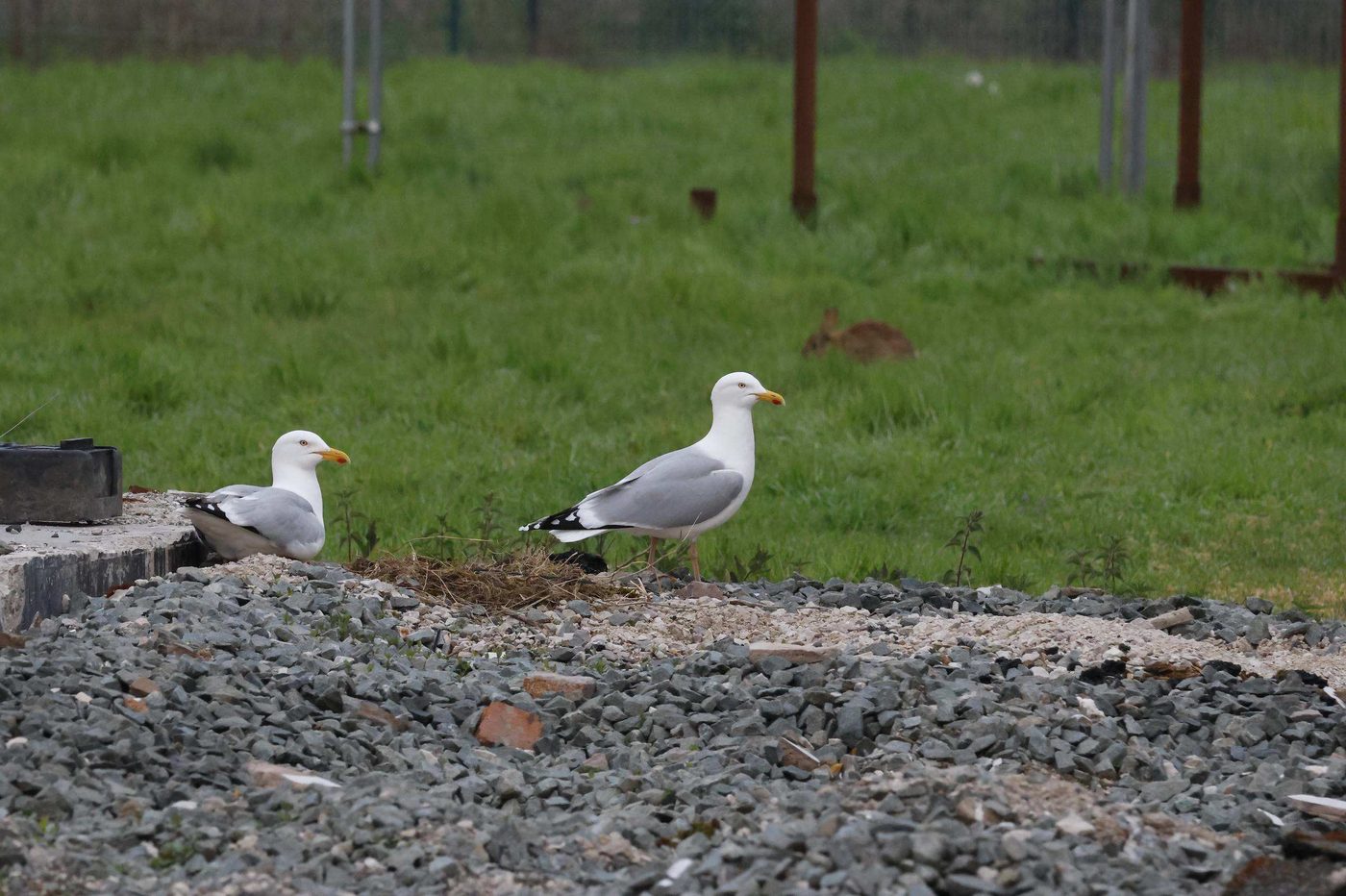
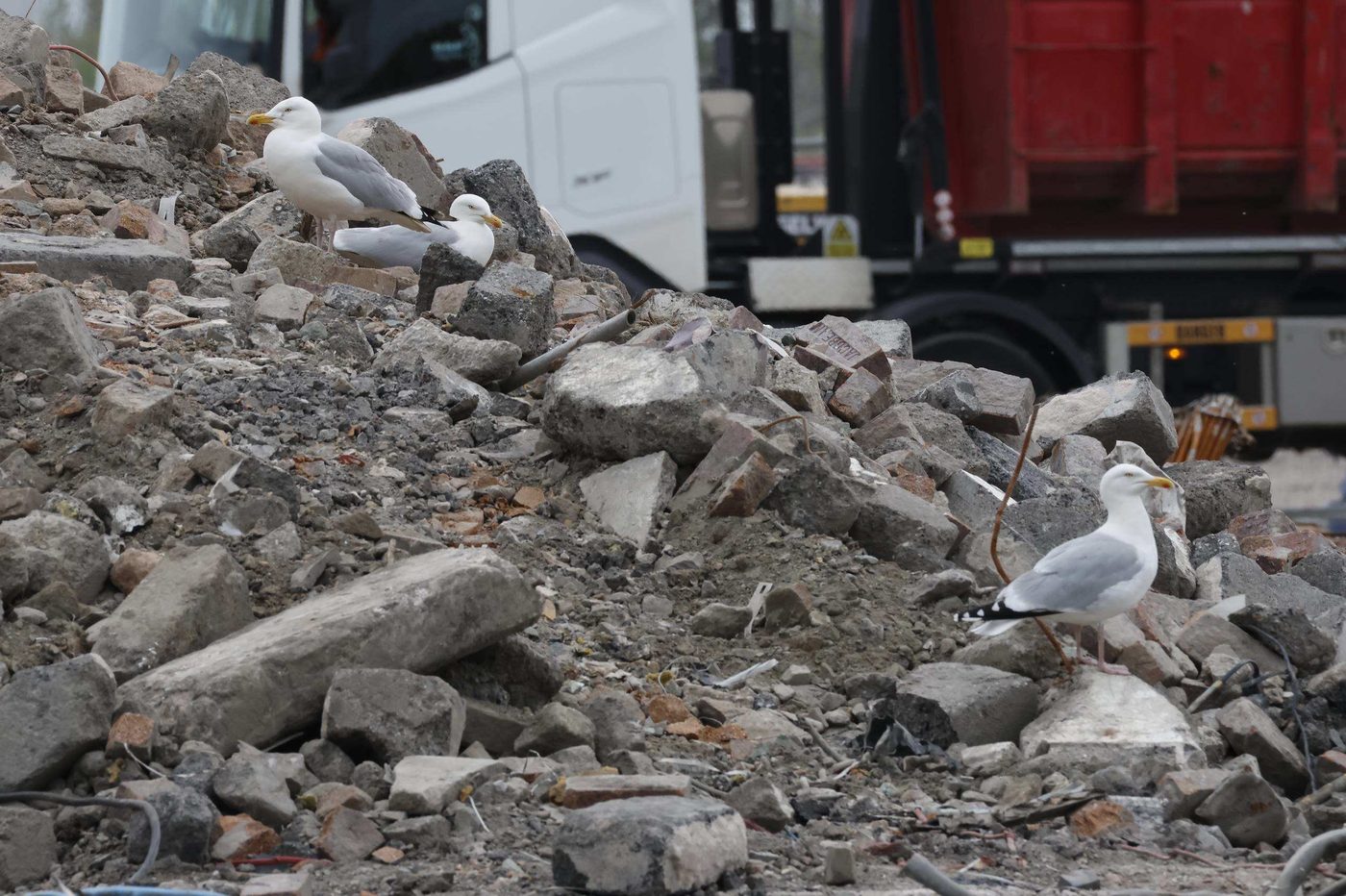
Lesser black-backed gull nesting among demolition rubble at Point of Ayr — dense ground nesting in operational areas
Ground nesting within demolition areas — June 2026
Gulls calling from demolished concrete post at Point of Ayr — territorial behaviour during breeding season
Territorial gull activity at the start of the programme
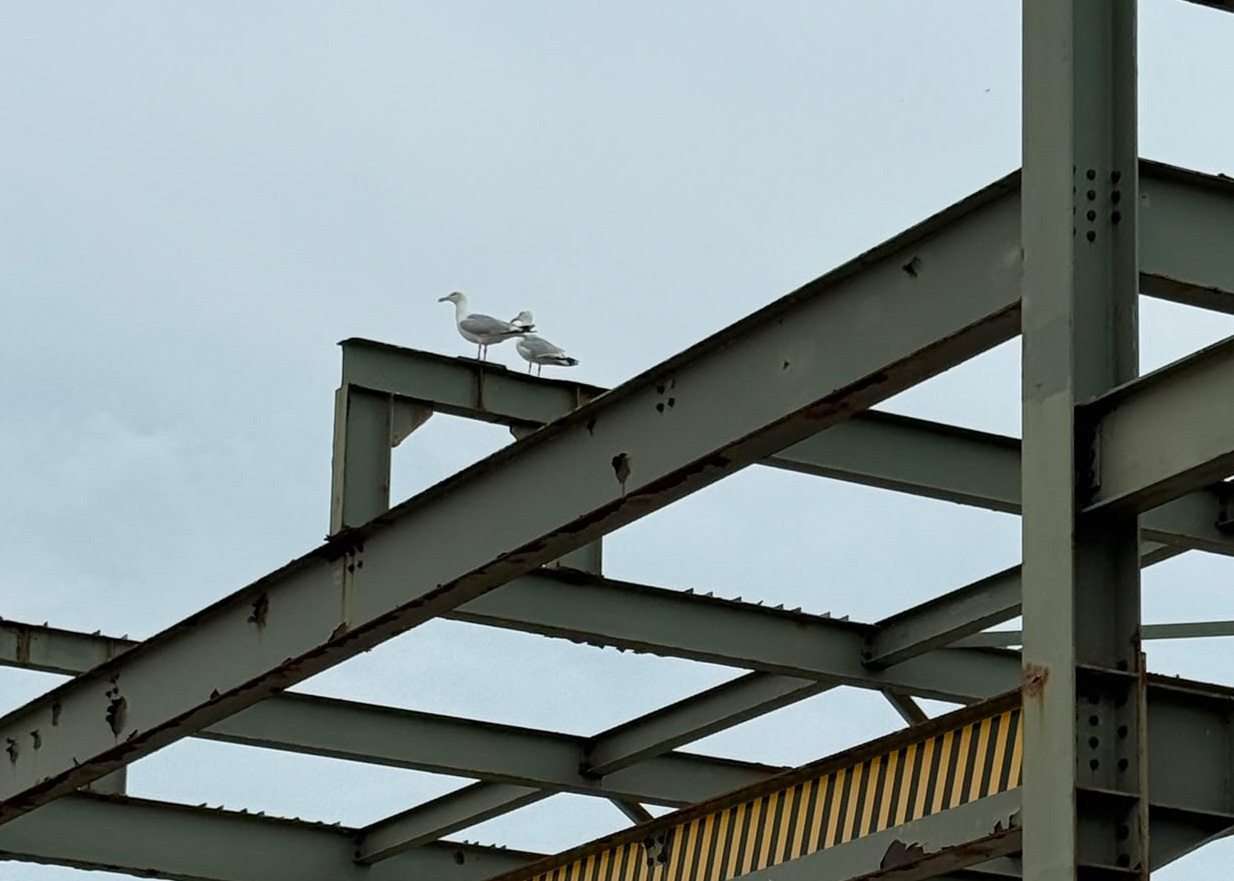
Two gulls roosting on rusting steel frame structure at Point of Ayr — birds using remaining infrastructure
Gulls using structural steelwork as roosting and territorial vantage points

Avian Environmental maintained a sustained presence from 1 June to 31 August 2026.

The programme combined professional falconry with continuous observation and complementary deterrence adapted to site conditions and the developing season.

Methods deployed during the programme included:

  • Harris hawk deployment
  • Peregrine falcon deployment
  • Gyrfalcon deployment
  • Vehicle and foot patrols
  • Laser deterrence
  • Bio-acoustic deterrence
  • Continuous monitoring of bird behaviour and nesting activity

Deployment was adapted throughout the programme according to bird behaviour, weather conditions, operational activity and the location of remaining bird pressure across the site.

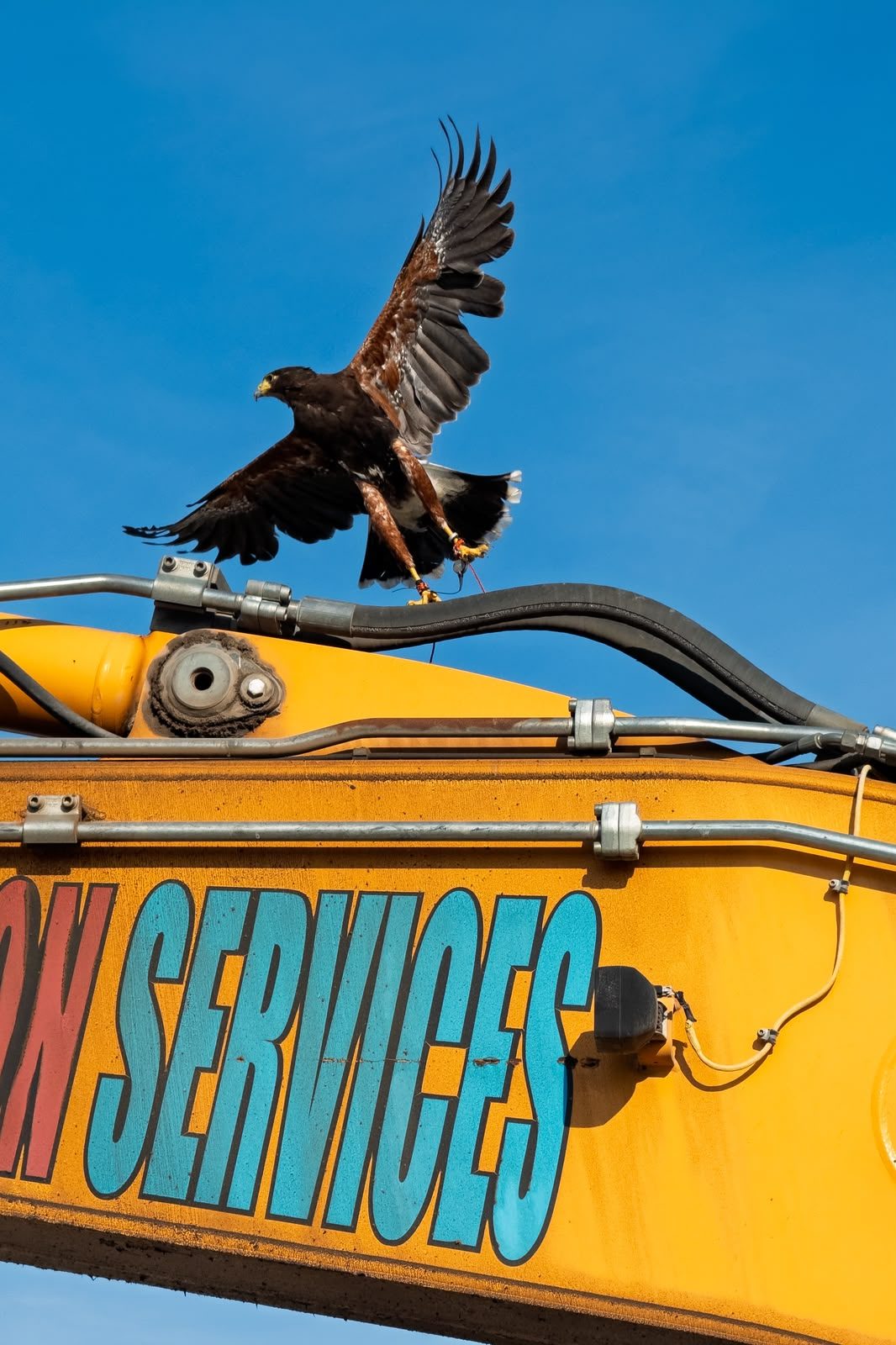
Harris hawk landing on D Morgan excavator arm at Point of Ayr — falconry-led industrial bird management
Harris hawk — operational deployment across the demolition area
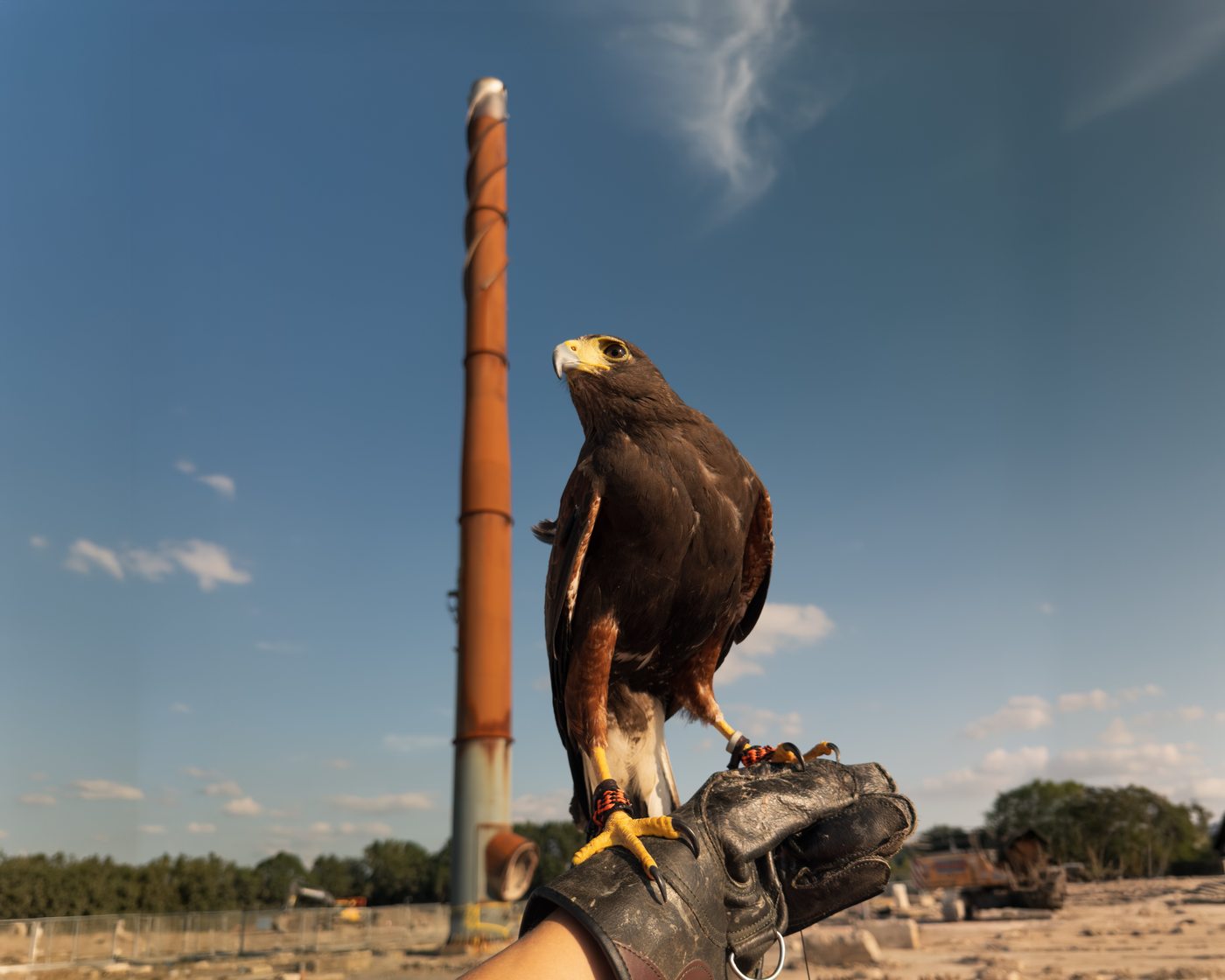
Harris hawk on falconer's glove at Point of Ayr with red chimney stack and blue sky — golden hour
Harris hawk on site — the chimney stack a constant landmark throughout the programme
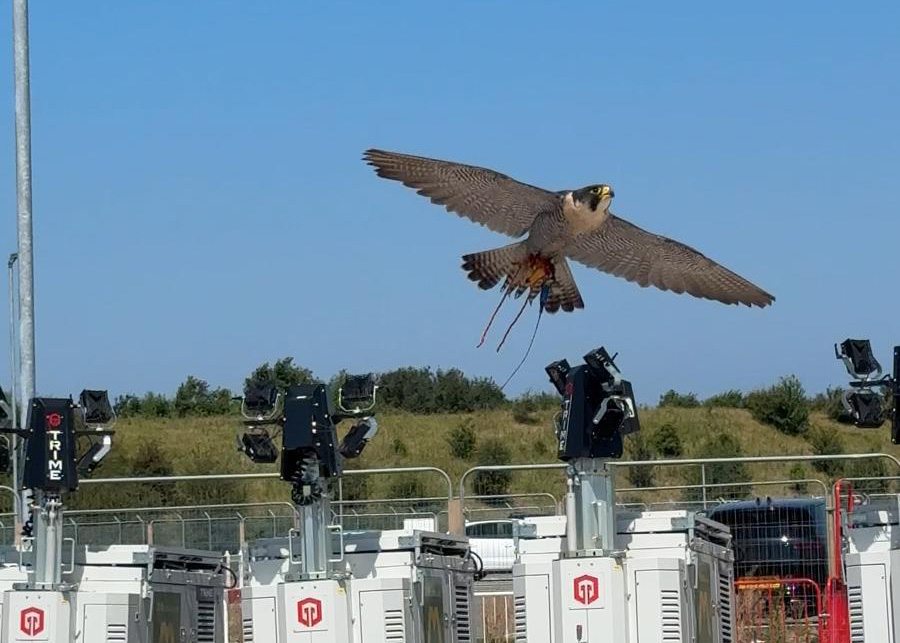
Peregrine falcon in flight over GP power units at Point of Ayr — gull deterrence on the operational site
Peregrine falcon — active deterrence across the site infrastructure

June

High breeding pressure

Dense breeding activity was present within areas affected by the works, including closely spaced ground nests. Early monitoring recorded substantial gull activity across the site.

July

Progressive reduction and displacement

As the programme continued, bird pressure became increasingly localised. Remaining nesting and territorial activity was monitored individually while sustained deterrence continued across operational areas.

August

Manageable activity within operational areas

Reports recorded low and manageable activity across the principal monitored areas, with residual gull concentration associated with other buildings on the wider site. The monitored operational areas were repeatedly recorded as having no active nesting.

Point of Ayr presented a site that changed continuously throughout the programme. Demolition, ground preparation and infrastructure works altered the physical environment week to week, creating new challenges as previously managed areas were cleared and adjacent areas came under pressure.

Bird-management deployment had to respond to those changes in real time. As structures were removed, nesting and roosting opportunities shifted. As access routes changed, patrol patterns were adapted. Sustained daily presence — rather than intermittent visits — was central to maintaining consistent pressure across the site.

Working alongside a major contractor on a live operational programme required close coordination and an approach that could operate without disrupting the construction schedule.

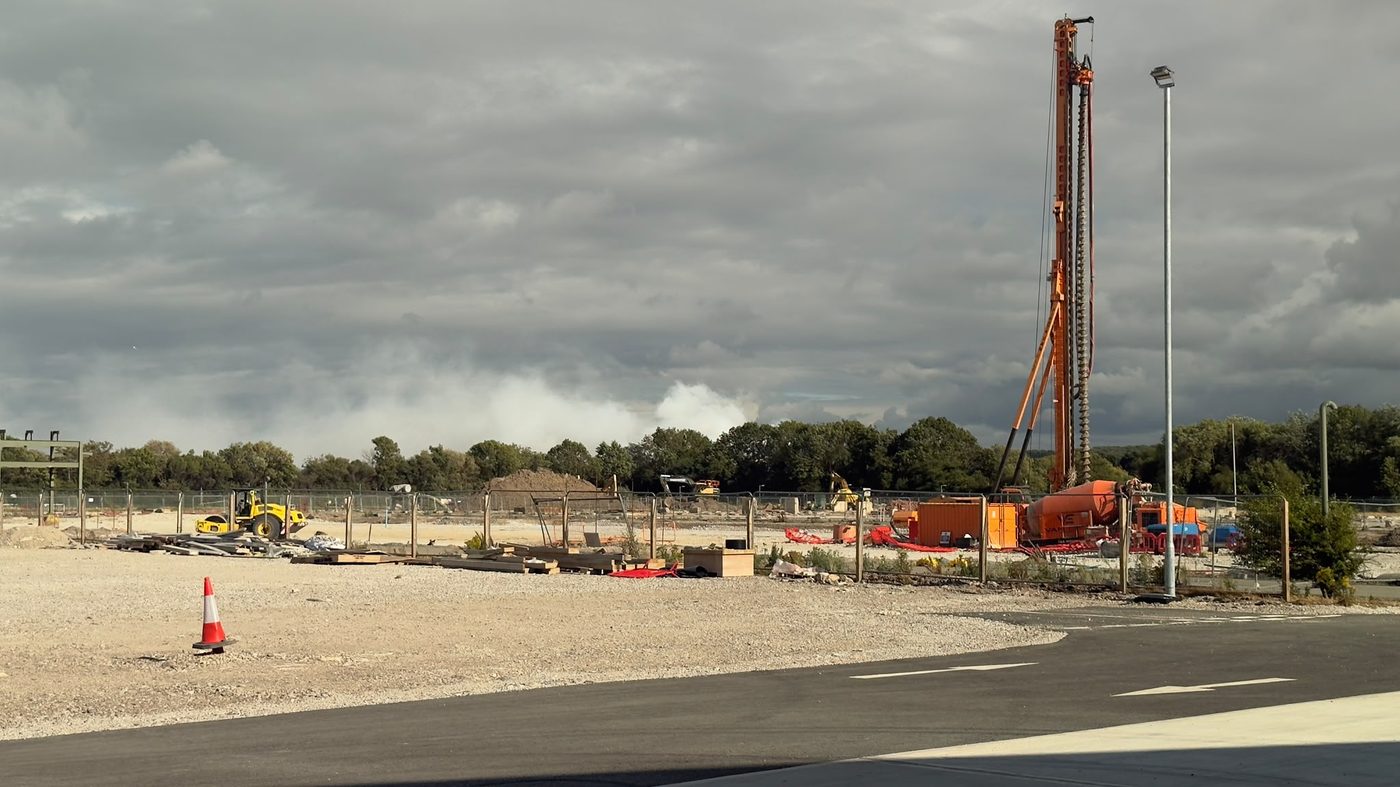
D Morgan excavator and piling rig at Point of Ayr — scale of the demolition and site preparation programme
The scale of works at Point of Ayr — demolition and site preparation in progress
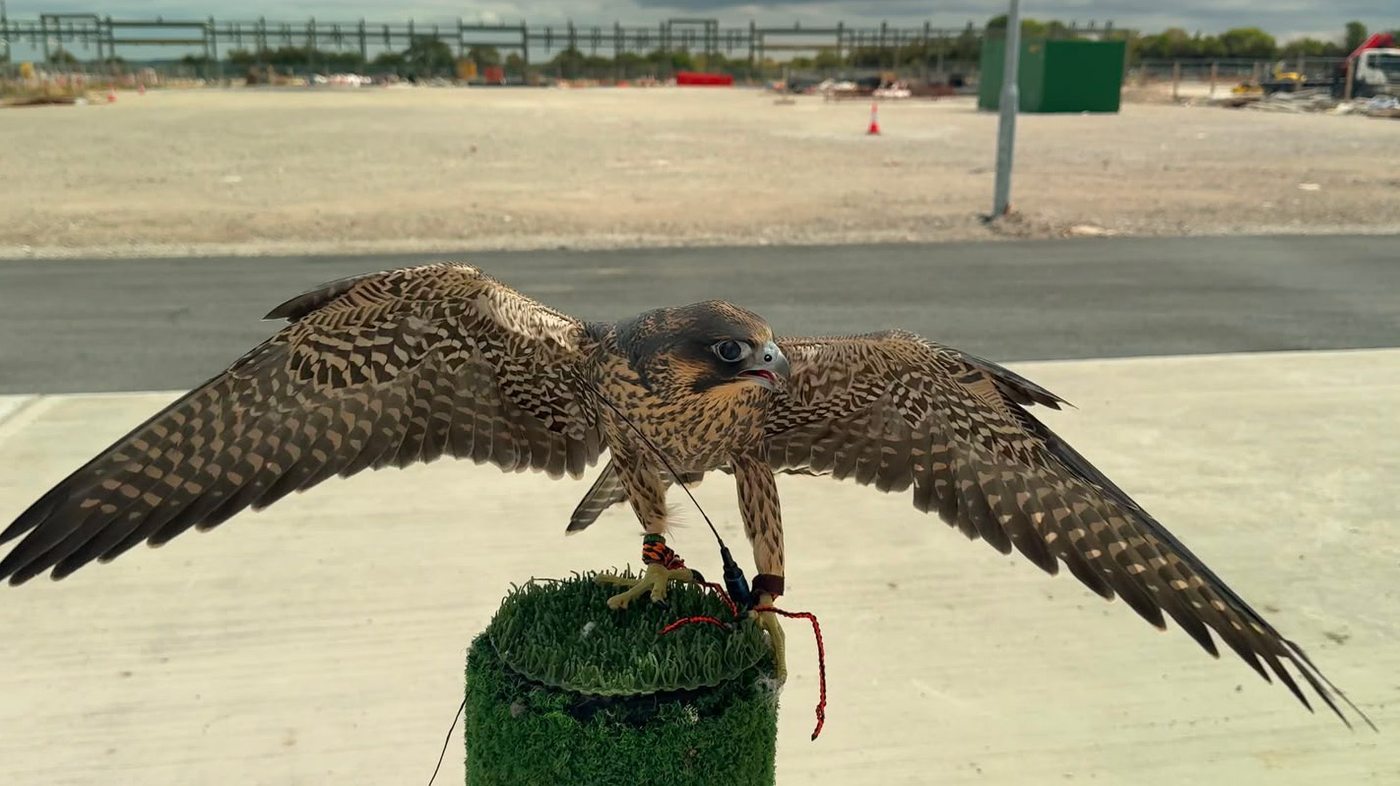
Young peregrine falcon wings spread on block perch at Point of Ayr — cleared site and steel infrastructure behind
Four-month-old peregrine falcon — deployed on site during the programme
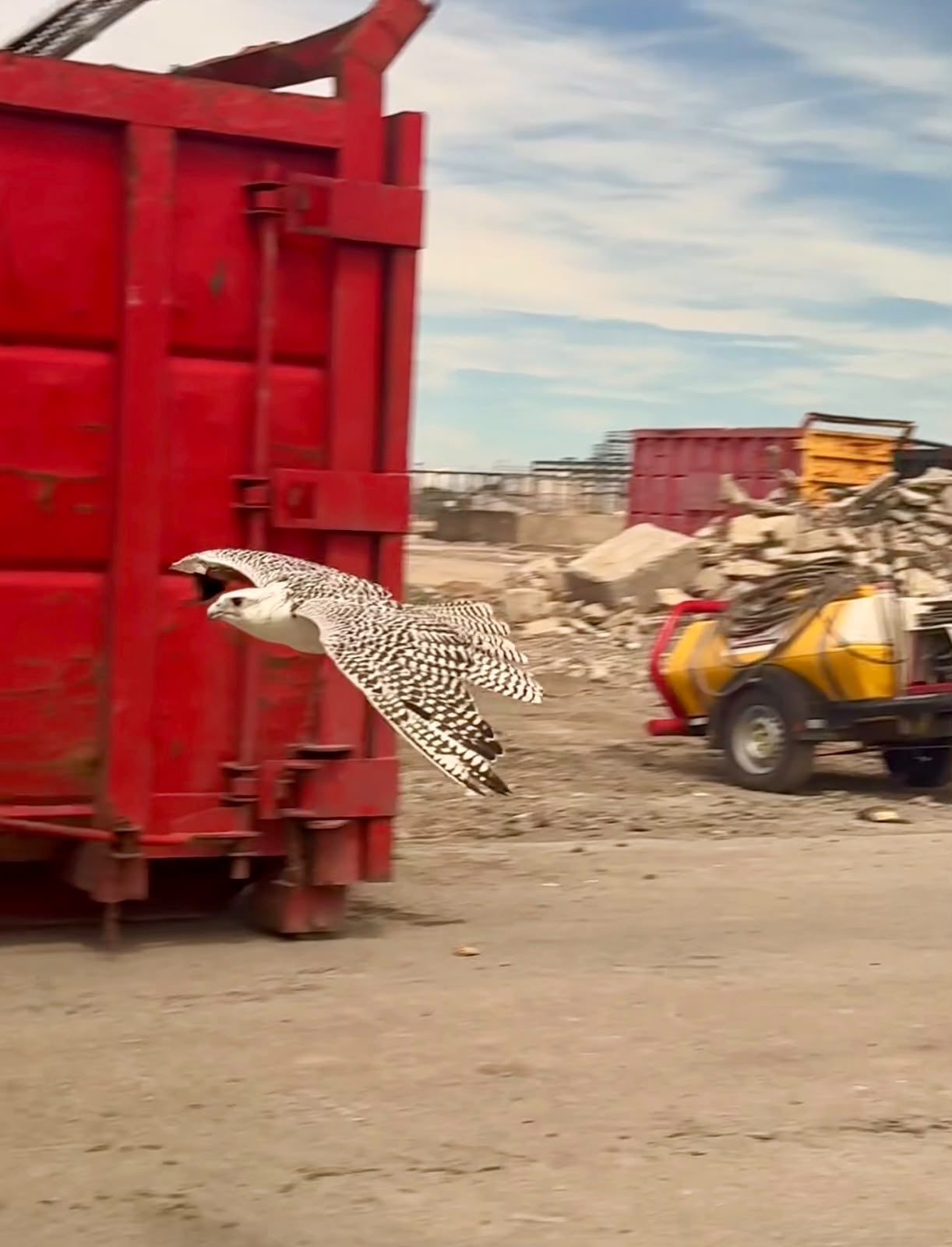
Gyrfalcon in low-level flight past industrial skip at Point of Ayr — active bird deterrence
Gyrfalcon deployment — deterrence at low level within the working area
50–65
Gulls recorded during early monitoring in June within operational areas
3
Month sustained operational programme, June–August 2026
0
Gulls recorded across monitored operational areas on final monitoring day
0
Landings recorded within the principal monitored areas at programme end

These observations relate to the monitored operational areas within the principal demolition footprint. A residual gull population remained associated with other structures on the wider Point of Ayr site. Bird activity naturally fluctuates according to breeding stage, weather, site operations and movement patterns. Observations represent field monitoring records from the programme period.

By the end of the three-month programme, the principal monitored operational areas — which had recorded dense ground nesting activity at the programme's start — were being consistently reported as clear of active nesting and with minimal bird activity.

Within the monitored operational footprint: bird pressure was progressively reduced from an initial intensive breeding condition to a low, manageable level that permitted site operations to continue without significant bird-related interruption.

The outcome reflects what sustained, adaptive field work achieves in this environment: not a single intervention but a programme that responds continuously to changing conditions, changing site layout and the natural progression of the breeding season.

A residual gull population remained elsewhere on the wider Point of Ayr site, associated with structures outside the principal managed area. This is characteristic of large, complex sites — active management concentrates and displaces pressure; it works alongside the site rather than eliminating the wider environment's bird population.

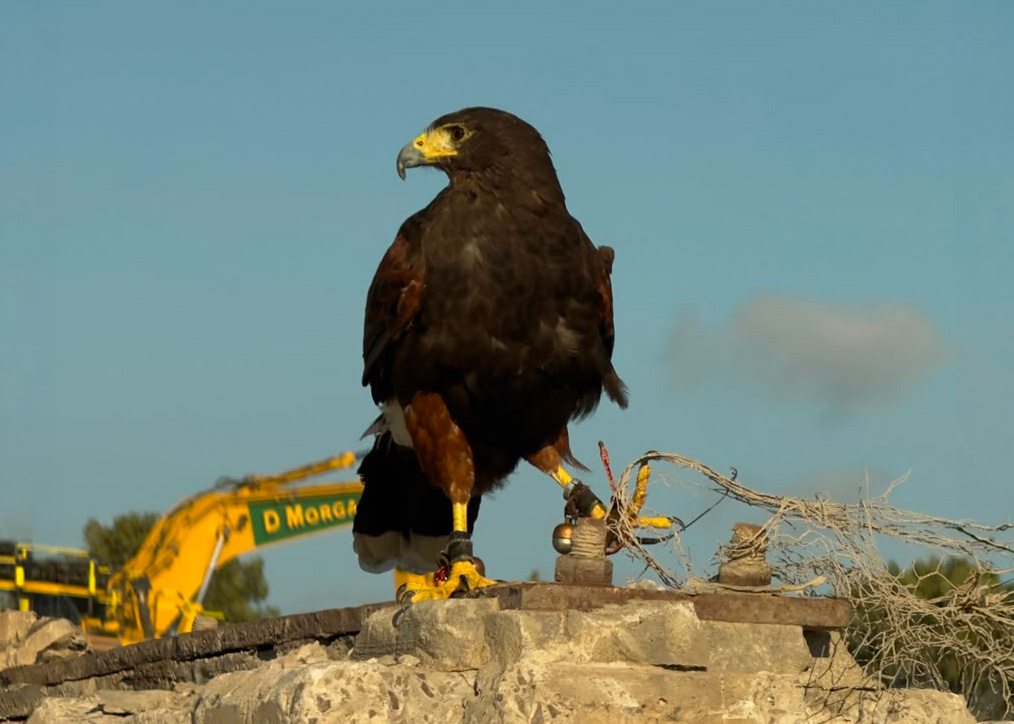
Harris hawk perched on demolished wall at Point of Ayr — D Morgan excavator in background, end of programme
Harris hawk at Point of Ayr — sustained operational presence throughout the programme

Managing bird pressure on an operational site?

If your project involves active construction, demolition or site preparation where bird activity is creating operational or regulatory challenges, we can advise on a structured programme suited to your timeline and environment.

Discuss your site with us.