Commercial Bird Control Gull Mitigation Commercial Gull Control Heritage Buildings Construction Industrial & Warehouse Feral Pigeon Control Planning & Environmental Bird Proofing
Case Studies How It Works About Contact Free Site Survey
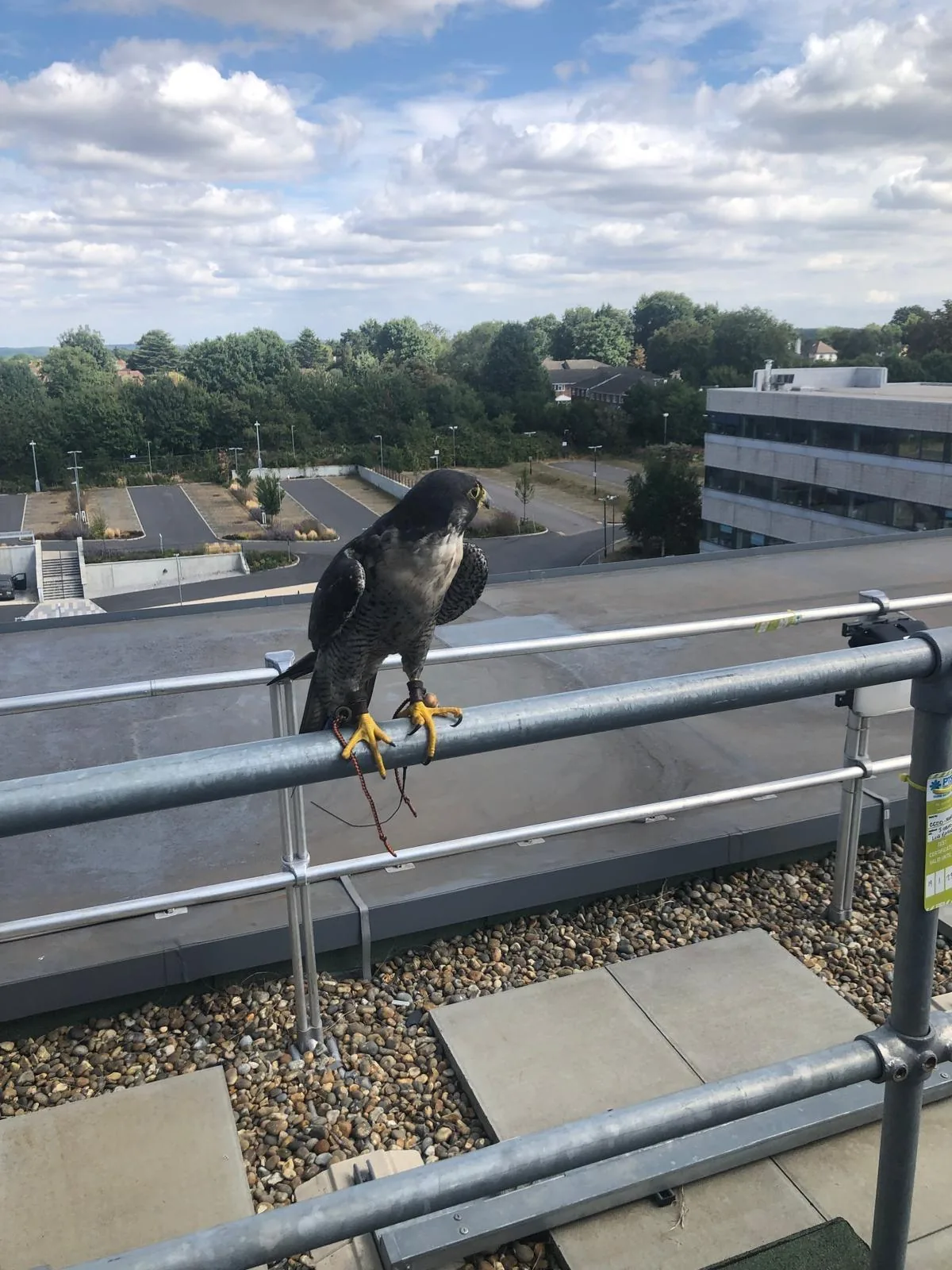
Harris hawk in operational flight — Westminster Abbey bird control, central London

Case Study · Heritage

Bird management at Westminster Abbey

Westminster, London Ongoing Heritage Bird Control
All case studies

Westminster Abbey is among the most demanding environments in which bird management can be asked to operate. A UNESCO World Heritage site, a working church, a state ceremonial venue and one of the UK's most visited tourist attractions — the constraints bear on every aspect of how the work is done.

The current programme is delivered by Avian Environmental UK, drawing on the established experience of its founder, Wayne Davis, in specialist falconry-led bird management at prestigious heritage and high-profile environments. The work requires the same operational discipline applied at any sensitive site: no installation, no physical trace on the building, and a method that functions fully within the visitor and ceremonial life of one of the world's most watched buildings.

Westminster Abbey presents a concentration of constraints that is rare even among high-profile heritage sites. The building is Grade I listed and sits within a UNESCO World Heritage buffer zone. It is an active place of worship with a daily programme of services, and a venue for state occasions — coronations, royal funerals, national acts of remembrance — where the expectations on appearance and conduct are absolute.

At the same time, the Abbey draws over a million visitors annually. Parliament Square is one of the highest-density pigeon environments in Central London. Feral pigeon pressure on the stonework, roof surfaces and surrounding terraces is persistent, and its management cannot wait for quiet periods that rarely arrive.

Conventional bird deterrent products — spikes, anti-perch wire, netting — are not appropriate here. Physical installation on a Grade I listed building requires listed building consent. Even where consent might be possible, the visual impact at a building of this profile is simply not acceptable. The method has to work without touching the building at all.
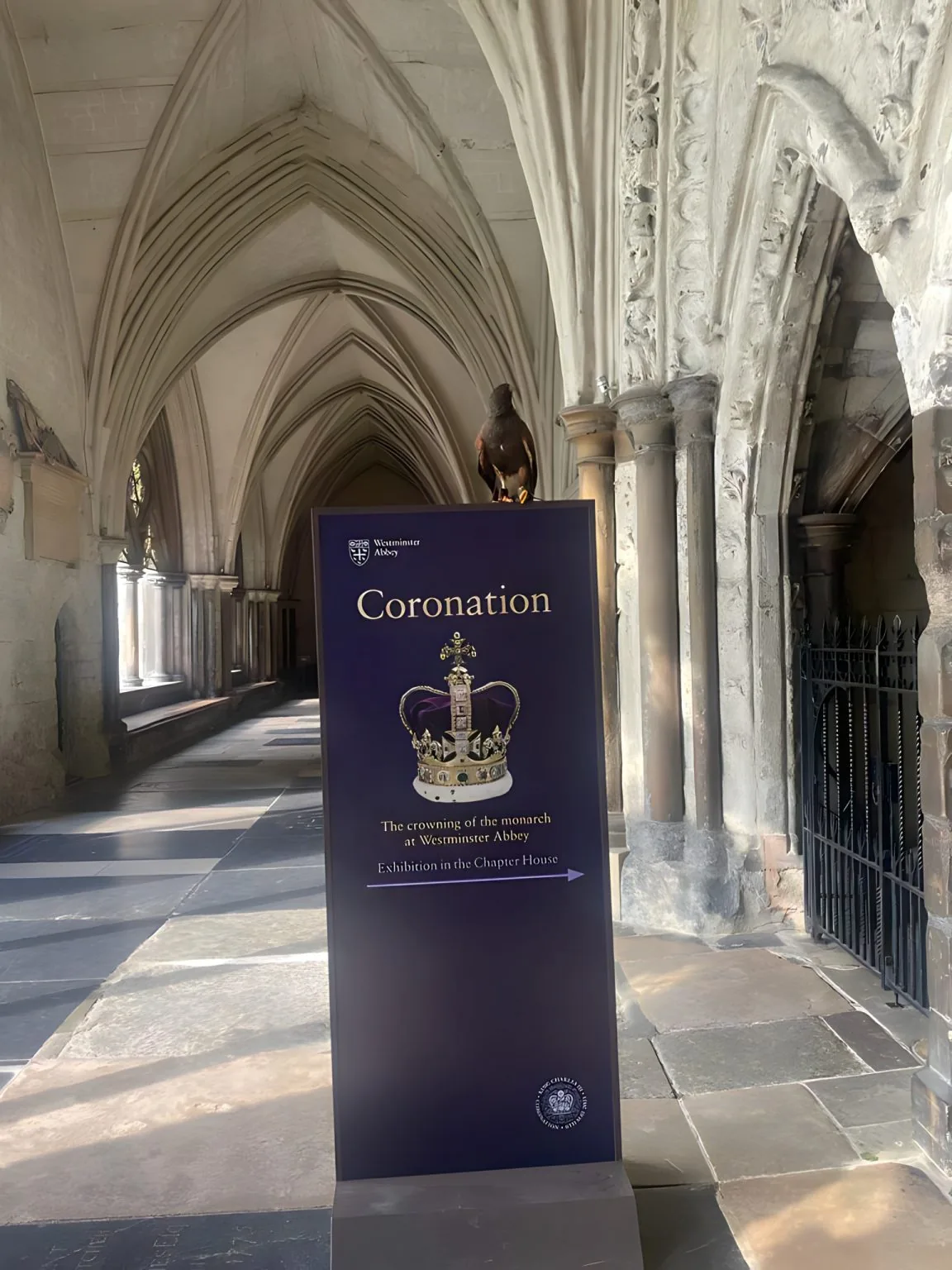
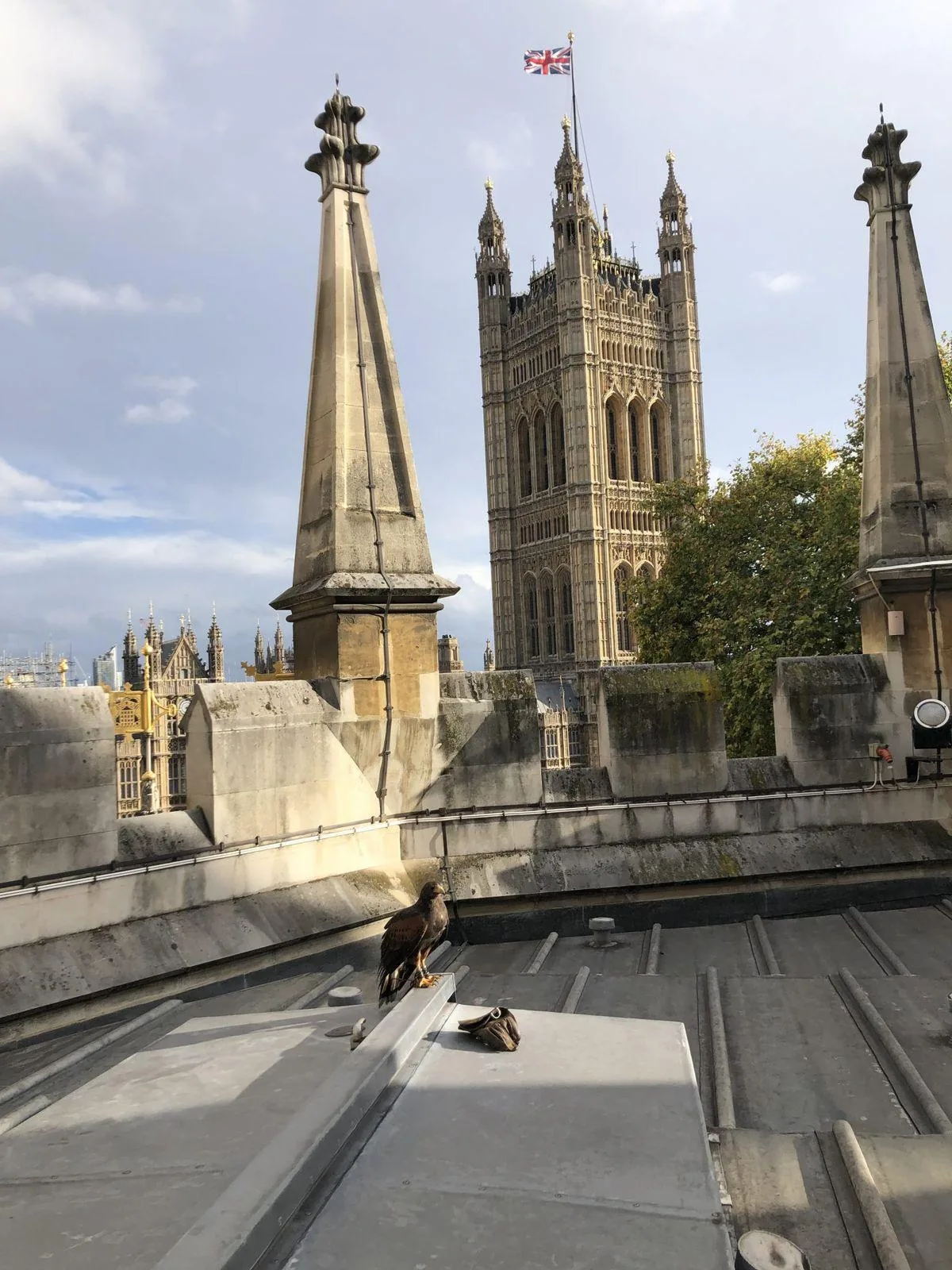
Harris hawk operational flight over Westminster Abbey terrace — falconry bird control in a heritage environment, central London
Harris hawk during an operational session at Westminster Abbey

Building status

Grade I listed. UNESCO World Heritage Site. No physical installation permitted without listed building consent.

Visitor environment

Over one million visitors annually. Operations must function within continuous public footfall without disruption or spectacle.

Ceremonial use

State occasions, royal ceremonies and national commemorations require impeccable operational sensitivity throughout the year.

Urban bird pressure

Parliament Square is among Central London's highest-density feral pigeon environments. Pressure is persistent and year-round.

Falconry is the approach that operates at Westminster Abbey without any building intervention. A trained Harris hawk introduced into the environment establishes genuine predator presence — a biological signal that drives pigeon dispersal in a way that static systems are not designed to replicate.

Pigeons and feral birds are generally less likely to habituate to a live raptor than they are to spikes, netting or audio deterrents. The instinctive response to an active predator is harder to override than familiarity with a fixed object or a repeated sound. Over time, learned avoidance builds: birds associate the site with predator activity and progressively reduce their use of it.

The work is timed around the Abbey's operational schedule. Sessions are structured to manage pressure at the points and periods when it is greatest, without disrupting services, visitor access or building maintenance activities.

"It's positive ecological control. Very environmentally friendly, sustainable."

— Wayne Davis, ITV News, 2022

The Harris hawk is the primary bird deployed — a species well-suited to the urban environment, responsive to handler direction and capable of working effectively within the physical constraints of a central London setting.

Operational discretion is treated as a primary requirement, not an afterthought. At a site under constant media and public scrutiny, the work proceeds quietly, without impediment to the experience of visitors or the conduct of the building's daily life.

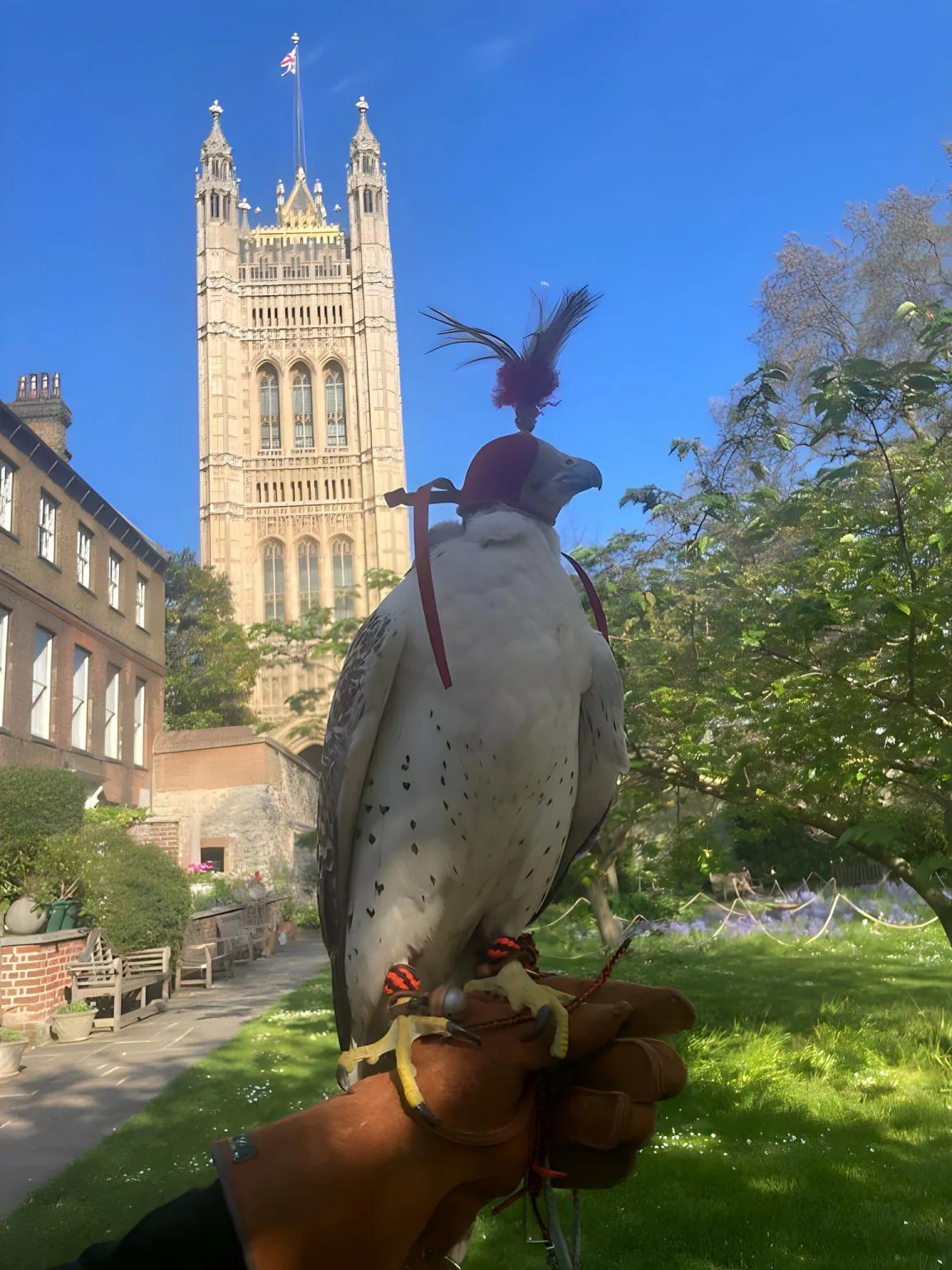
Harris hawk on glove — Westminster bird control, central London heritage environment
Harris hawk — the primary species deployed at Westminster Abbey
Operational falconry at a major London heritage building — bird deterrence without fixings or installation
Falconry deterrence — no installation, no physical trace on the building

Westminster Abbey illustrates the conditions under which falconry-based deterrence is not merely preferred, but the most practically appropriate method available.

Physical deterrent products require installation. At a Grade I listed building, installation requires listed building consent — a process that is slow, uncertain and, in many cases, unlikely to result in approval for structural additions to protected fabric. Even where consent is granted, the aesthetic impact of spike strips and wire systems on stonework of national significance is a legitimate concern in its own right.

Electronic systems — audio deterrents, lasers — produce variable results and typically require repeated escalation as birds adapt to them. A live raptor draws on an instinctive predator response that is more resistant to adaptation, though no single method eliminates bird pressure entirely without consistent management.

Falconry can also be deployed and withdrawn without trace. If the programme is paused, or a ceremonial occasion requires a clear field, the work stops and resumes without residue. Nothing is fixed to or left on the building.

EnvironmentWestminster Abbey, London SW1P
Building statusGrade I listed · UNESCO World Heritage Site
Programme typeOngoing bird management
Primary speciesFeral pigeon (Columba livia domestica)
MethodFalconry deterrence — Harris hawk
Installation requiredNone
Listed building consentNot required for falconry deployment — no fixings, no installation
ComplianceWildlife & Countryside Act 1981

Westminster Abbey is an active, ongoing programme. Unlike a construction-phase contract with a defined end point, heritage bird management of this kind is sustained over the long term — the pressure is constant, and so is the management.

The measure of success at a site like this is not a single outcome figure. It is the consistent maintenance of low bird pressure at a building that cannot tolerate visible fouling, structural damage to its stonework, or the presence of nesting birds during state occasions.

That standard has been maintained continuously throughout the programme.

Westminster Abbey is one of a number of high-profile heritage and cultural environments in Wayne Davis's specialist career in falconry-led bird management. Tate Modern, Lord's Cricket Ground and other prominent London landmarks have formed part of that operational history, which underpins the current Avian Environmental UK programme.

For heritage buildings, listed structures and sensitive environments where physical deterrent methods are constrained by consent, visual impact or building fabric, falconry-based bird management offers a practical, installation-free alternative worth considering.

0330 223 2383 Free Site Survey